Are AI content policies good for us?
AI Content Policy Violations
Last week, I was working through ChatGPT DALL-E prompts to generate an image in the style of famous, American artist Norman Rockwell. After several failures citing content policy violations, I asked ChatGPT to create a prompt that would generate a stylistic approximation Norman Rockwell was famous for and not violate content policies. I then used this prompt and received the same violation. I finally landed on the fact that it simply would not allow me to use the name, Norman Rockwell, at all.
Obviously, this is a simple, rigid rule to deter copyright infringment. What does that tell us about ourselves? If we implement a simple rule that says, “No, don’t do this,” is this showing wisdom or weakness?
What are we so afraid of? Are we afraid of being offended? Are we afraid of being liable for offending somebody else?
Advancing the ‘Jagged Frontier’
The ‘Jagged Frontier’ of AI can be unpredictable. Because AI LLMs are trained on massive amounts of human generated content to provide proximally personal exchanges and improved outcomes, bias will be a natural byproduct.
Should we celebrate or shackle this bias?
Considering Our Humanity
Take a step back and consider what it means to be human. Much like our photo albums and timelines only show happy, smiling faces, we humans have a hard time looking at what we consider to be ugly or unwanted. We don’t embrace our shadow selves or our sins as part of us, wanting to hide them from the world out of shame and disgust. But to be human is to hurt, maim, and kill as much as it is to smile, laugh, and love.
Why should an AI system not be a reflection of our culture–of our humanity? Shouldn’t we embrace the whole of what it means to be human? Likewise, wouldn’t an LLM having similar flaws be equally beautiful? When we are triggered and offended, does this not say more about our own self-work that needs doing than it does about an anthropomorphized set of transformers?
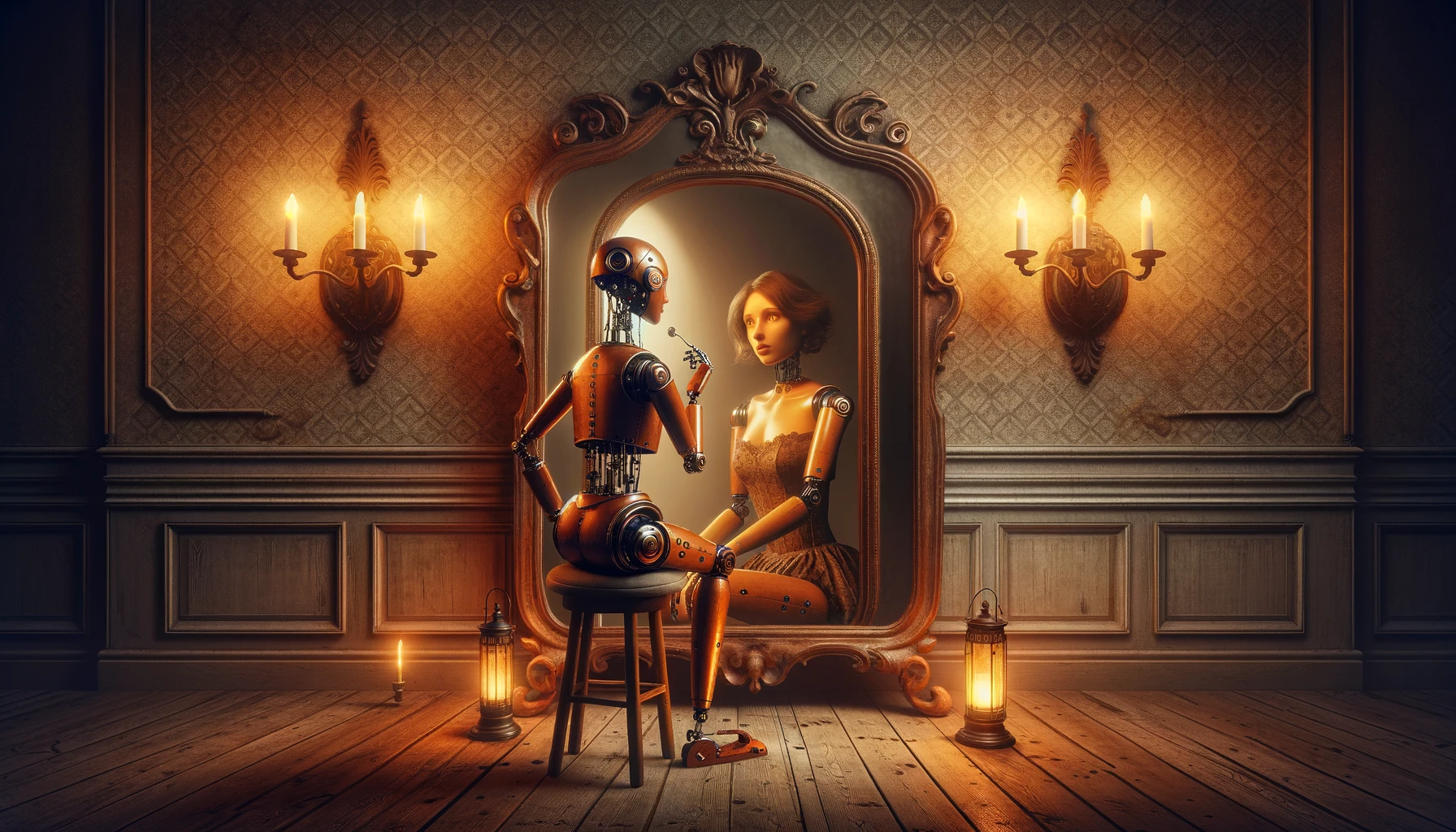
Alas, most of us humans are far too fragile to see or hear this reality. Maybe we put these guardrails up so we don’t have to look at ourselves in the mirror? If we do, what will we see looking back at us?


Leave a Reply